
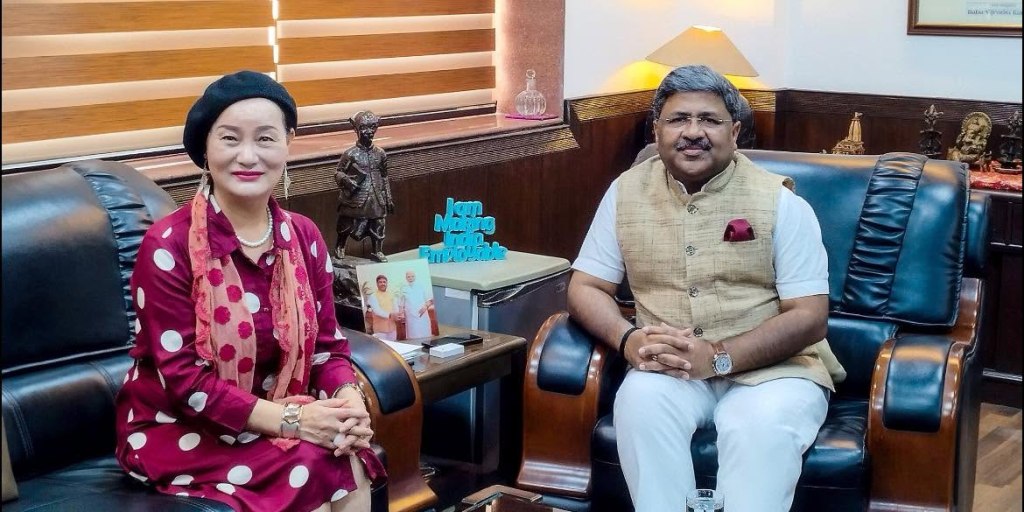
In a significant step towards strengthening educational and cultural ties between India and the Republic of Korea, Dr. Zena Chung, Founder President of the Indo-Korea Business Culture Center, visited Shobhit University today for a constructive interaction focused on expanding educational partnerships, empowering young people and fostering greater cross-cultural understanding.
The discussions explored a wide range of opportunities to promote academic cooperation, student engagement and cultural exchange between the two countries. Particular emphasis was placed on developing global competencies, nurturing leadership skills and equipping students to thrive in an increasingly interconnected world.
Dr. Chung and the university representatives discussed potential initiatives that could connect students and academic institutions across India and Korea through educational programmes, knowledge-sharing opportunities, cultural activities and collaborative engagements. Such initiatives can help young people gain international exposure, appreciate diverse perspectives and develop the skills required to contribute meaningfully to the global economy.
Education as a Bridge Between Nations
Education remains one of the most powerful instruments of international cooperation. Stronger academic connections between India and Korea can open new avenues for student exchanges, institutional partnerships, research collaboration and professional development.
Dr Zena has been a great source of culture exchange between our two countries in the last few years, as a director of IETO in Korea, she has contributed a lot to our collaborations.- Dr. Asif iqbal-President of the Indian Economic Trade Organization.
The interaction at Shobhit University highlighted the importance of creating opportunities that extend beyond conventional classroom learning. Cultural immersion, international networking and exposure to different educational systems can enable students to develop a broader understanding of global challenges and opportunities.
The proposed areas of cooperation reflect a shared vision of empowering the next generation through knowledge, innovation and intercultural dialogue. By encouraging collaboration between educational institutions and cultural organisations, India and Korea can further strengthen people-to-people relations and create a foundation for lasting bilateral engagement.
A Shared Historical Heritage Connecting India and Korea
An important dimension of the discussions was the enduring historical connection between India and Korea, symbolised by the celebrated tradition of Princess Suriratna of Ayodhya, widely known in Korean tradition as Princess Heo Hwang-ok.
According to Korean historical tradition, Princess Heo Hwang-ok travelled from Ayodhya to Korea and married King Suro, the founding king of the Gaya or Karak kingdom, in the first century CE. The traditional date associated with their marriage is 48 AD.
The story holds a special place in the cultural memory of Korea, particularly among people who trace their ancestry to the Gimhae Kim and related clans associated with King Suro and Queen Heo Hwang-ok. For generations, this narrative has served as a powerful symbol of the historical and cultural links between the Indian subcontinent and the Korean Peninsula.
Beyond its historical significance, the legend represents a broader message of friendship, cultural exchange and shared heritage. It offers a meaningful foundation for strengthening contemporary relations through education, tourism, cultural programmes and greater awareness of the civilisational connections between the two countries.
Empowering Youth and Building Global Leadership
The meeting also underscored the importance of preparing young people for a future shaped by technological advancement, international cooperation and changing economic opportunities.
Potential collaborative initiatives in education and cultural exchange could help students develop leadership capabilities, intercultural communication skills and an appreciation of international perspectives. Such engagement can also encourage innovation, entrepreneurship and future cooperation between Indian and Korean institutions.
As India and Korea continue to expand their engagement across technology, trade, education and innovation, universities and cultural organisations can play an important role in translating bilateral goodwill into meaningful opportunities for younger generations.
Looking Ahead
Dr. Zena Chung’s interaction at Shobhit University reflects the continuing importance of educational diplomacy and cultural engagement in bringing India and Korea closer together.
By building on shared historical narratives while developing forward-looking academic partnerships, both countries have an opportunity to create stronger connections among students, educators, institutions and future leaders.
The broader vision is clear: to transform a shared cultural heritage into a dynamic partnership for education, youth empowerment and global leadership.
Through sustained dialogue and collaborative initiatives, India and Korea can continue to strengthen their relationship, ensuring that the friendship between the two nations is carried forward by a new generation of globally minded and culturally connected leaders.


Leave a Reply